Fatigue: Our Daily Struggle

I see so many adults in clinic that struggle with chronic fatigue. I hear it often, in our day to day grind, more and more individuals complain of fatigue. They come into the clinic hoping for a quick answer and sometimes, those lab results come back normal and to their dismay, they are left without an answer.

There can be a multitude of causes for your fatigue, ranging from your diet, dehydration, quality and quantity of sleep, to your stress levels and other underlying diseases causing side effects of fatigue.

I will discuss a few here, but this is just the tip of the iceberg. It is imperative that you find a medical provider that you trust and can confide in so that you can do a proper and thorough workup in order to find and treat the underlying cause of your fatigue.

Underlying Disease

Our primary concern when patients present with fatigue is to rule out underlying medical etiology of symptoms. Fatigue is obviously a medical complaint, therefore all of the workup we perform is medically rooted, but one of the first steps I recommend is to do a thorough lab panel to rule out underlying causes such as anemia, hypothyroidism and inflammatory disease.

Another important discussion is to have a candid conversation about any anxiety and depression you may be experiencing. Sometimes individuals can present with symptoms of fatigue, but when we dive deeper we find that patients can be struggling with feels of feeling sad, loss of interest in activities they enjoyed, decreased libido and even frequent crying.

Similarly, anxiety can leave you feeling worn out. As you navigate your emotions of anxiety and worry, you can struggle with quality and quantity of sleep, causing you to feel run down and tired. Furthermore, with all that energy and anxiety coursing through you, you end up using more of your energy to manage your anxiety and that can cause fatigue too.

Lifestyle

Whether the labs and workup come back normal or not, lifestyle changes are imperative in order to bring about change.

Sleep: It might seem obvious but the amount and quality of sleep you get can contribute to your fatigue. Most adults require 6-8 hours of sleep a night. Some techniques to help with sleep are maintaining a sleep wake schedule, limiting light in the room, limiting activities in bed that are not related to sleep, and limiting television and phone time before bed. Sometimes, in spite of getting 8 hours of sleep, you can wake up feeling tired. This can be an indication that you might be snoring or not getting good quality sleep. A sleep study and proper workup with your medical provider can help determine the reason you are still waking up tired.

Diet: Our diet plays a critical role in our health. A critical change in thought process is to start to realize that food is nourishment and helps fuel our body. When we start to treat food as a healing power that helps our body thrive, we use the nutrition to heal and empower our body.

Meet with your medical provider to determine what foods are and are not ok for you. Maintain a food diary, if certain foods are causing you bloating, nausea and flare ups, you can get an allergy test to determine if you have an allergy or sensitivity to these foods and considering omitting them from your diet.

Exercise: Exercise enables the body to heal and thrive. It helps improve cardiovascular health, boost your immune system and even help heal your wounds. “There is no medication or nutritional supplement that even comes close to having all of the effects exercise does,” says David C. Nieman, PhD, author of The Exercise-Health Connection: How to Reduce Your Risk of Disease and Other Illnesses by Making Exercise Your Medicine (Human Kinetics, 1998). “It’s truly the best medicine we know of.”

It’s important to also find an exercise you enjoy. After having a stressful day, a good workout that you enjoy can help you unwind and reduce stress. However, if you do exercise that you do not enjoy and it increases your stress, it can actually increase your stress levels and cause more inflammation.

Fatigue is a complex, multi-fold symptom that can be due to a multitude of underlying causes. Also, remember, that of the possible causes of fatigue, you do not necessarily have to have one or the other. Sometimes, one of the underlying causes can actually cause the other issues. So, its important that you work with your medical provider to identify the etiology of your symptoms and work on resolving your underlying cause and truly start to regain your quality of life. Again, these are just a few basic concepts to start the conversation with your medical provider. Your healthcare provider is your partner in helping you understand how to help your body function at it’s best, so find one that you trust and who listens to you!

All about those portions!

We are all constantly working at bettering and improving ourselves. With an effort focused at striking more of a balance towards unleashing our full potential and preparing our bodies to achieve the goals we conceive. We often talk about gut health, optimizing the function of our gut and the gut brain axis. A key component of improving the gut is our diet. With a focus on fiber rich, protein rich, clean foods, we empower the gut to function as it was originally meant to.

Portion control and moderation help us optimize functionality and gut health. As much as we might strive to obtain portion control, it can be difficult to achieve. So, here we discuss a few tips that might make it easier for you to moderate your meals and portion sizes.

1. Use smaller plates.

Studies demonstrate that sizes of plates, bowls, cups, and spoons can subconsciously influence our portion sizes. With larger dishes, we serve a larger portion and feel that we need to “finish the food in our plates”, leading to increase in consumption. In one study, people using a large bowl ate 77% more pasta than those using a medium-sized bowl1.

By using smaller dishes, once your serving is complete, it gives you an opportunity to wait and assess hunger levels before choosing to refill or feeling full.

Leptin and Ghrelin seem to be the primary hunger regulating hormones.

Leptin is primarily secreted in fat cells as well as in the stomach and other organs. Leptin decreases hunger sensation.

Ghrelin is primarily secreted in the lining of the stomach and increases hunger sensation.

Both hormones respond to how well fed you are. Leptin can correlate with fat mass. So, the more fat you have, the more leptin your produce.  However, with obesity, the balance of these two hormones can be compromised and not function well. Individuals with more fat can even develop leptin resistance. So, it becomes a vicious cycle.

  • Individuals with more adipose tissue produce more leptin.
  • This increases leptin resistance, so your body thinks you are starving and you end up hungrier and eating more.2
  • This leads to more weight gain, increase weight and the cycle continues.

Therefore, by eating from smaller plates, and forcing yourself into smaller more frequent meals, you can encourage the body to use the stored fat for energy.

2. Ask for half the serving when eating out

Restaurants serve meals in larger dishes and have higher portion sizes. This leads to serving sizes of almost 2.5x the recommended size. 3,4

When placing your order, ask them to pack half into a carry out container. This way, you will have the correct portion in your plate and won’t be tempted to eat more or accidentally ingest more calories while socializing. You will also have leftovers for lunch the next day!

3. Drink water

Thirst and hunger signals can often be confused. If you have a recent meal and are feeling hungry again, drink more water. Hydration can help promote fullness, hydration of cells and prevent confusion of hunger and thirst.

In one study, it was found that when overweight or obese individuals drank 17 oz of water 30 minutes before a meal, they consumed 13% fewer calories without trying to make any changes.5

4. Eat slower and take smaller bites

Eating quickly makes you less aware of feeling full. If you eat slower, it will allow your stomach to signal fullness to your brain and prevent you from overeating. Your brain can take about 20 minutes to register fullness so by slowing down your meals you can allow the time to register fullness and decrease caloric intake during meals.

Additionally, avoid multitasking while eating. When eating on the go or while watching television, you do not focus on your meal, you do not enjoy your meal and you do not take the time to allow the brain to register fullness. This can also lead to overeating. 6

In Medical News Today, a study cited that when we take our first bite, the brain senses taste, quality and “it choreographs a wonderful symphony of neuronal signals that link that experience to its context, hedonic value, memories, emotions, and the other senses, to produce a coherent response,” says Charles S. Zuker, the senior author of the paper cited on this page7

So, this means that food and taste induce an emotional reaction which can lead to overeating due to indulging in the feelings associated with food. If you struggle with overeating or emotionally eating, it is worth look into your relationship with food and assessing why you may be overeating. A counselor can help you deep dive into this conversation and discuss the emotional aspect of eating that you might be struggling with.

5. Avoid eating out of larger containers

Studies have shown that those that eat out of larger containers, consume more calories regardless of taste or quality of food.

Consider measuring out proper portions and bagging them or placing them in smaller containers. When you reach for that snack, have the smaller snack size you have prepared in order to limit eating excessive calories in excess of portion sizes.

6. Address the portion distortion

Due to large portion sizes in restaurants, jumbo sized packaging and distortion of portions it can be difficult to understand what a “portion” is. In an effort to resolve portion distortion, review the nutrition label and see what the portion size is for the packaging or the food you are eating.  Use measuring cups and scales to help you measure out foods.

Since you might have portion distortion, “eyeballing” your measurements can lead to you consuming more than the recommended portion and not realizing that you are overeating.

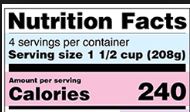
Here is a guide on reading the nutrition label:

In the two examples above, you can see that each item, respectively, has a portion size of 1 tbsp and 1 1/2 cups. This means, in the first example, 1 tbsp has 64 calories. The second one has 240 calories in 1.5 cups.

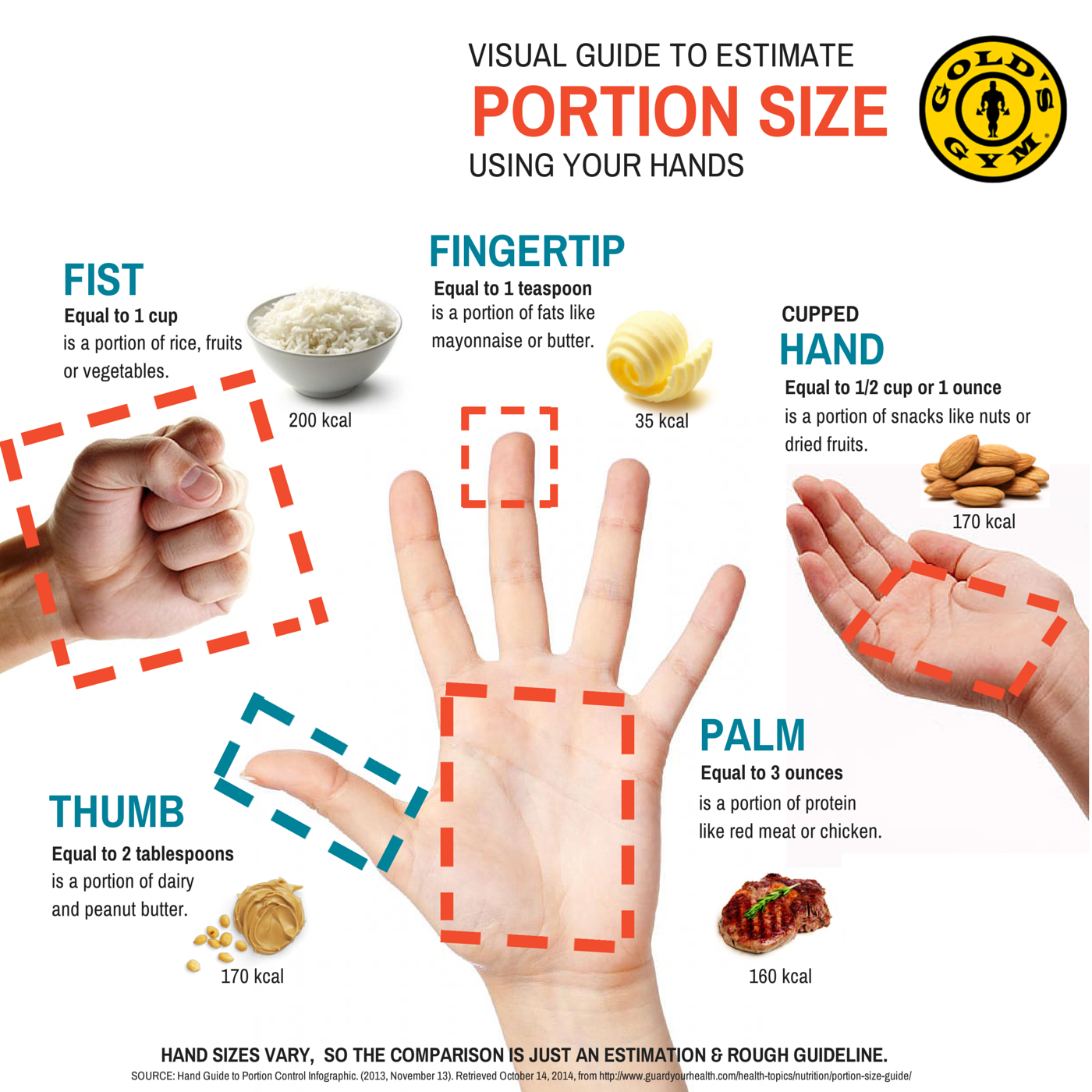
You can also use your hand as a quick reference for portion sizes

Take away point

As you consciously try to make changes and improve your gut health, lose weight and reduce your portions, it takes a conscious effort to help bring about long lasting changes. The weight loss journey is not a sprint or a short-term diet. In order to lose weight and keep it off, it is important to make sustainable lifestyle changes. This is why instead of fad diets and quick fixes, take the time to make meaningful, small changes. Smaller changes can help lead to long lasting changes in habits thus helping you both lose weight and keep it off.

References

  1. https://www.ncbi.nlm.nih.gov/pubmed/21982579
  2. https://www.precisionnutrition.com/leptin-ghrelin-weight-loss
  3. https://www.ncbi.nlm.nih.gov/pubmed/20470810
  4. https://www.ncbi.nlm.nih.gov/pubmed/16963346
  5. https://www.ncbi.nlm.nih.gov/pubmed/18589036
  6. https://www.ncbi.nlm.nih.gov/pubmed/24462489
  7. https://www.medicalnewstoday.com/articles/321998.php

Got Pain?

Got Pain?

Pain is one of the most common complaints I see in clinic. Whether it is acute or chronic pain, whether a recent injury, an old injury or old pain that is now flaring up, most of us live with some degree of pain and it can worsen overtime.

So, what are some of the most common causes of pain and how can you manage them on your own or know when you have to seek medical advice?

Pain is typically musculoskeletal or nerve pain. Depending on when your symptoms started and how, you might need additional imaging or we might try some conservative management before sending you out for Xrays and MRIs.

Here I touch briefly on a few of the most common causes of pain and their management.

Arthritis

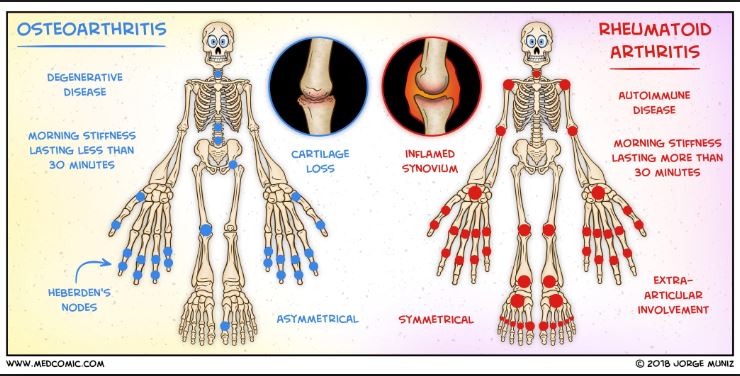
The most common arthritis we all know and hear of is called Osteoarthritis, it is a result of wear and tear and loss of cartilage in our joint space. On occasion, a patient can have Rheumatoid Arthritis. Rheumatoid Arthritis presents a bit differently and can be of a more autoimmune etiology- basically when your immune system starts to attack itself.

Sometimes a physical exam can help us distinguish the two. However, additional labs and Xrays can be performed to determine which type of arthritis a patient might have.

Muscle Pain

In clinic, muscle pain is the most common reason I see patients for pain.

Overuse, poor posture, sedentary lifestyle and dehydration can cause swelling and knots in the muscles. Overtime muscles can become fatigued and unable to perform their own functions. This can lead to other muscle groups doing work they were not designed to do and can cause additional trauma and pain.

Trigger points are “knots” that form in the muscle and soft tissue, causing myofascial pain and inflammation. Myofascial treatment to help reduce these trigger points, can help reduce the scar tissue and inflammation, and improve mobility and functionality of the muscles.

Myofascial therapy along with trigger points injections to release the knots in the muscle would be beneficial to help reduce the inflammation and improve mobility. In combination with trigger point injections, physical therapy, chiropractic interventions and massage therapy, these muscles can be strengthened to help improve myofascial function and prevent recurrent symptoms.

Acute Injury

With an acute injury such as a fall or sports injury, muscles, ligaments and tendons can become strained or sprained and cause pain. Depending on the type of injury, Xrays are not always necessary. If a medical provider suspects a possible fracture, Xrays will be ordered. Otherwise, if the injury seems to be due to muscle or soft tissue injury, other interventions are usually sought first.

If appropriate, patients can be given anti-inflammatory meds- such as Motrin or Aleve. If symptoms are really severe, sometimes a steroid medication can be used. Steroids help reduce pain and inflammation in the short term.

In the setting of an acute injury, often providers will recommend RICE protocols: rest, ice, compression and elevation. It is important to monitor for worsening symptoms and prevent blood clots.

Typically, if symptoms persist, a provider might consider referring a patient to physical therapy, chiropractor or massage therapy.

Thereafter, if symptoms persist imaging might be considered, such as an MRI.

Chronic Pain

Chronic Pain can be a result of several underlying factors such as Osteoarthritis, Rheumatoid Arthritis, chronic trauma or injury, or even some autoimmune disease.

Autoimmune disease can be due to underlying inflammation and causing your immune system to attack your own body. When you develop autoimmune disease, it can cause chronic pain and inflammation leading to worsening symptoms and continued loss of function.

There are several autoimmune diseases. Many are chronic and require a visit with a specialist, require medications and aggressive monitoring.

Depending on your symptoms, personal history and family history, your medical provider will decide which ones you are at risk for and perform additional testing to rule them in or out.

Nerve Pain

Lastly, we will briefly discuss neuropathy, or nerve pain. Nerve pain can cause numbness, tingling, burning sensation to the areas the nerve innervates, usually in the feet or legs depending on the cause, nerves affected or underlying disease.

Several diseases can cause neuropathy, such as Diabetes Mellitus or Vitamin B12 deficiency. Controlling or resolving the underlying cause can sometimes resolve your symptoms. Usually lab tests and simple studies can be done to rule out the underlying cause.

Occasionally, additional imaging or tests might be required such as an MRI or EMG test. An MRI can help determine if you have a herniated disc, pinched nerve or other disease affecting your nerve and causing your symptoms. An EMG tests for nerve and muscle conduction to identify which nerve might be affected and can be causing your pain.

There are medication options to help manage symptoms of neuropathy as you undergo workup. However, to truly treat the pain, the underlying cause of the nerve pain should be treated.

Obviously, pain and muscle injury are not always clear, patients can have multiple reasons for pain and underlying causes. It is important to have a frank conversation with your provider and discuss what the right treatment plan for you might be. You might be surprised to find, that the right treatment is not always with medication. Have that conversation to see how you can help heal your body in a more natural and nurturing way!

-Asma Bhaidani, PA-C